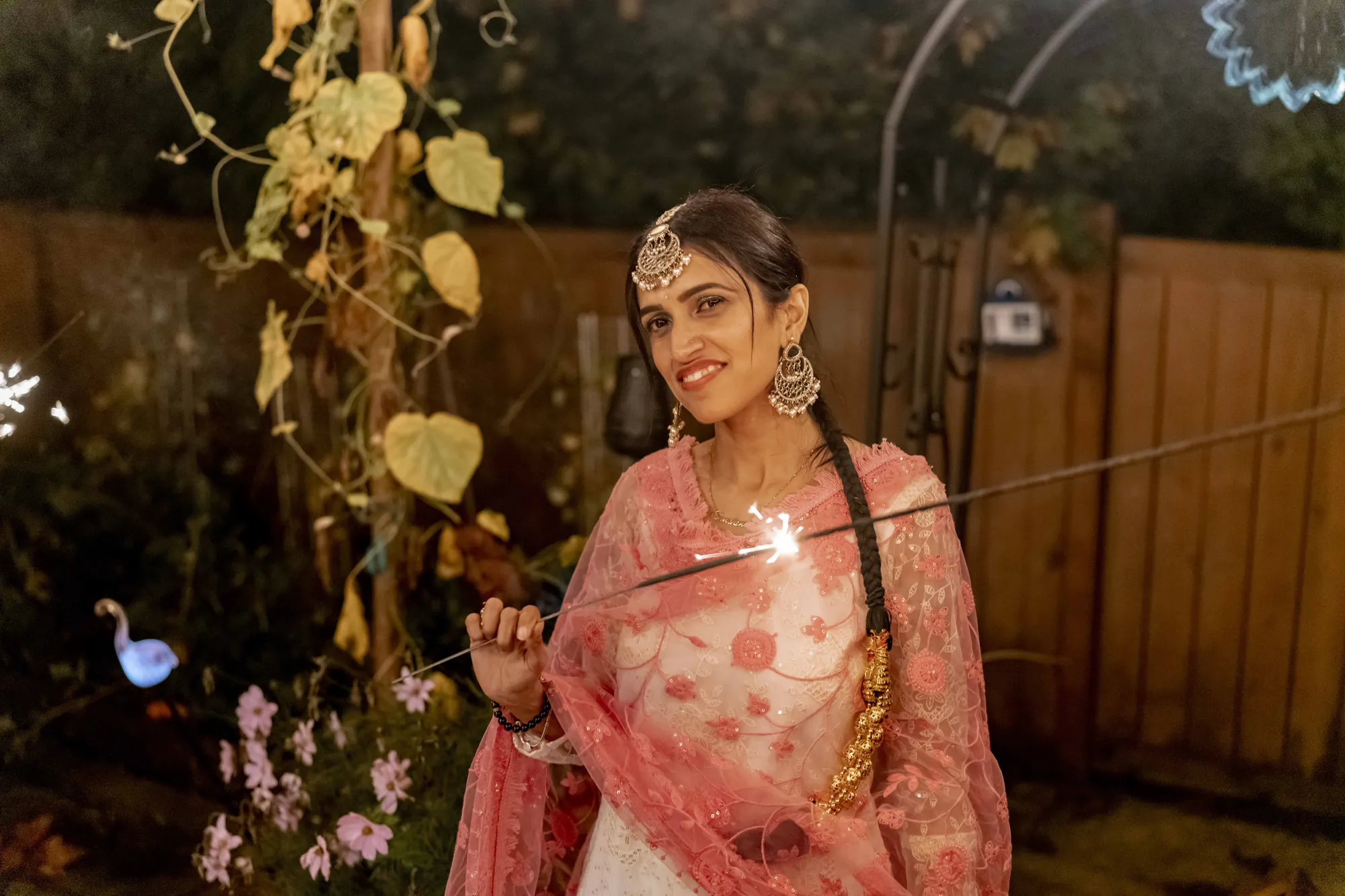
Diwali is the one night of the year when most families already own the perfect photo outfit. New clothes are part of the festival, the house is glowing, and grandparents, cousins and kids are finally in one place. The real question is how to put it together so everyone looks like themselves once the only light comes from diyas and sparklers. This guide is the festival version of our broader what to wear for family photos guide, written for Hindu, Sikh and Jain families in Snohomish County and the Eastside who celebrate the Festival of Lights. If you are still working out timing and location, start with our Diwali family portraits planning guide, and see our Indian family ceremony photography page for the other celebrations we photograph.
Why Diwali Photos Are Different From Other Family Sessions
Diwali 2026 falls on Sunday, November 8, and many families celebrate over several days around it, with Lakshmi puja, visits to relatives, sweets and fireworks spread across the week. Most of the photos that matter happen in the evening, after puja, when the diyas are lit and the kids are itching to get to the sparklers. That changes how clothing reads on camera:
- The light is low and warm. Diyas, candles, string lights and sparklers all glow orange and gold, so every color shifts warmer than it looks in daylight.
- The background is dark. A porch, a backyard or a front door at night falls to near black, and your outfits carry most of the color in the frame.
- Detail sits close to the light. A rangoli at your feet, a thali in someone's hands and a row of diyas on the step all put light right next to fabric and jewelry, which is where embroidery and sequins shine.
- Everyone is moving, so how sleeves, dupattas and pallus are secured matters as much as how they look.
Color Palettes That Glow in Warm Light
Traditional festive colors are traditional for a reason: they hold up in firelight. These are the tones that stay rich after sunset:
- Magenta, rani pink and fuchsia: bright enough to hold color in near darkness, and flattering on most skin tones.
- Marigold, saffron and mustard: they echo the flower garlands and diya flames and make a warm frame look intentional.
- Emerald and bottle green: a cool jewel tone that keeps a warm scene from turning all orange.
- Royal blue, peacock and teal: deep colors that separate beautifully from a dark background when they carry some zari or embroidery.
- Gold and ivory: the neutrals of Diwali. They reflect the glow back onto faces and tie mixed colors together.
Pastels and ivory are a lovely choice at night, with one caveat. Under sparklers and diyas, ivory turns a soft candlelit cream and blush turns peachy gold, which looks warm and elegant. Plain pastels can look flat next to jewel tones, so choose ones with mirror work, sequins, gota patti or a metallic border.
The one color to be careful with is head-to-toe black. At night, a black kurta or saree against a dark yard leaves only a face and hands in the frame. Black works well when it is contrasted: heavy gold embroidery, an ivory dupatta, a bright jacket or a colorful border.
What Women and Girls Can Wear
Any traditional outfit you feel good in will photograph well. A few notes on how each one behaves on a Diwali evening:
- Saree. Silk and heavier georgettes drape and catch light beautifully. Pin the pallu at the shoulder so it stays put while you bend over the diyas or rangoli.
- Lehenga. The most dramatic option for photos, especially with a flared skirt that moves. If you are rewearing a sangeet or reception lehenga, our South Asian wedding photography guide has more on how heavy embellishment reads on camera.
- Anarkali. A floor-length flare that looks graceful standing, walking and sitting on steps, and easy to layer over leggings for warmth.
- Salwar suit or sharara with dupatta. Comfortable for a long evening of cooking, puja and visiting, and easy to style up with jewelry.
Embroidery, zari, sequins and mirror work are your friends at night. They pick up every point of light from diyas and sparklers and give texture to a frame that could otherwise look flat. When you drape your dupatta, keep it off the neckline and ears so it does not cover your necklace or earrings; a pin at one shoulder and a loose drape across the arms usually shows both.
What Men and Boys Can Wear
Men's festive wear has fewer moving parts, which makes it easy to get right:
- Kurta pajama. A silk or silk-blend kurta with churidar or straight pants is the simplest, most comfortable choice for a long evening.
- Kurta with Nehru jacket. Adds structure and a second color, and a jacket in the family's anchor tone is an easy way to coordinate with a spouse's outfit.
- Sherwani. A beautiful choice if the evening includes a party or larger gathering, and it carries embroidery well in low light.
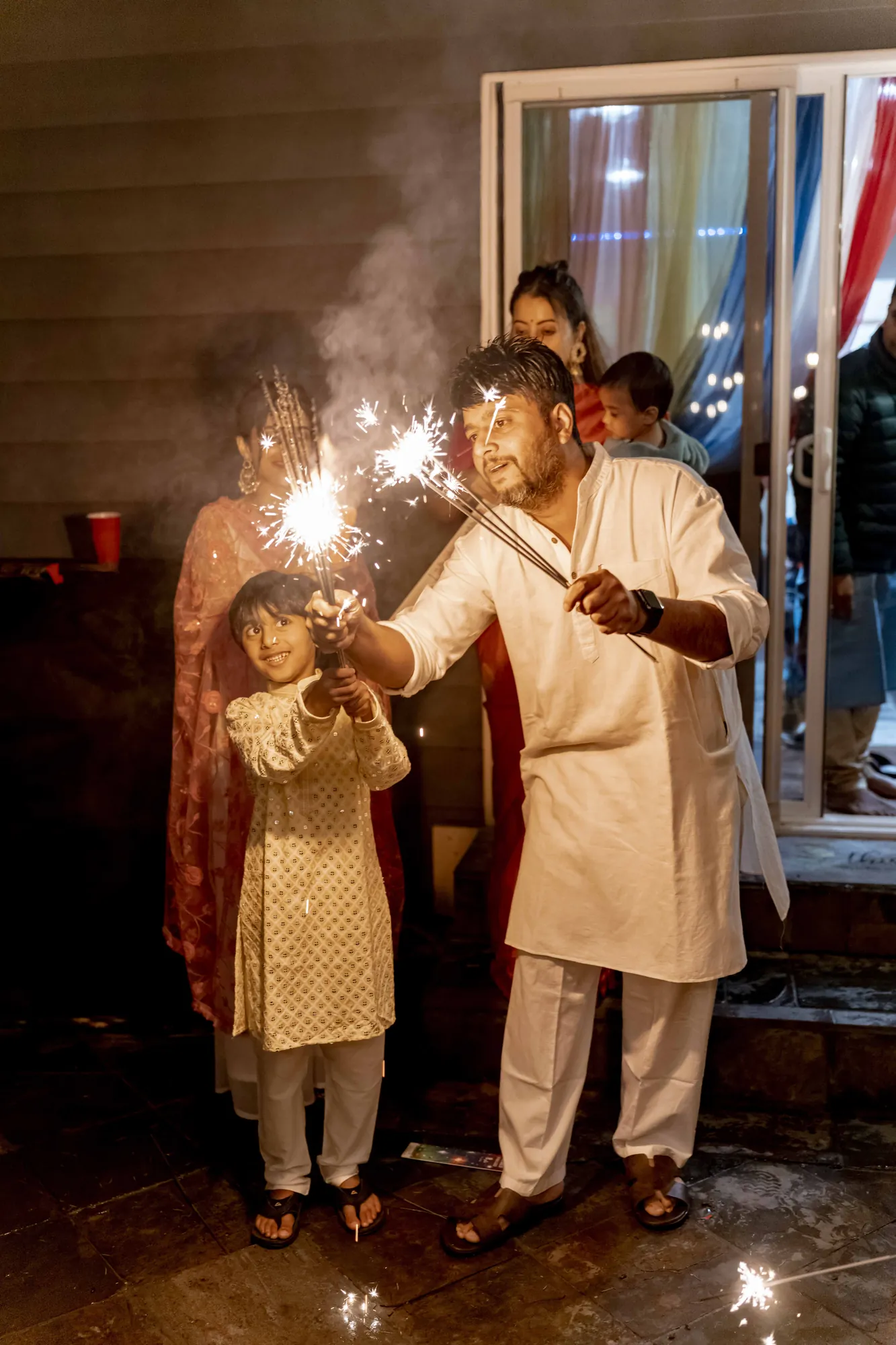
White, ivory and cream kurtas read especially well with sparkler light. The fabric turns warm gold and outlines the person against a dark background, which is why a father and son in ivory lighting sparklers together makes such a strong frame. Mojaris, juttis or kolhapuris finish the look; simple sandals are fine for boys who will be running around.
Dressing Kids and Babies for a November Evening
Kids wear festive clothes for hours on Diwali, and the photos will show whether they are comfortable. A few habits help:
- Comfort first. Choose soft linings and avoid scratchy netting or heavy beadwork at the neck and underarms.
- Layer underneath. A thin thermal or soft long-sleeve top under a kurta or lehenga choli, plus leggings or warm tights, makes a Pacific Northwest November night far more bearable.
- Shoes they already know. New juttis that pinch will end the evening early. Break them in during the week, or choose soft sandals or ballet flats.
- Babies in soft cotton or silk blends, with a warm onesie underneath and a shawl for between frames.
Coordinating a Multi-Generation Family
Diwali is often the one evening when grandparents, aunts, uncles and cousins are all in the same frame, which is exactly when coordination matters most. A simple approach works for groups of any size:
- One anchor color per branch. Each household picks a color (say emerald, magenta or royal blue) and dresses around it, so every family unit reads clearly in the big group shot.
- Grandparents in the richest tones. Deep maroon, bottle green or a silk saree with a heavy border puts elders at the visual center, where they belong.
- Spread the neutrals. A few people in ivory or gold across the group ties the colors together.
- Avoid everyone in the same color. A row of identical outfits turns into one block of fabric at night and makes faces harder to pick out.
Jewelry, Hair and Dupattas
- Maang tikka and earrings. A maang tikka, jhumkas or chandbalis sit right next to the face and catch sparkler light in close portraits. They are worth wearing even if the rest of your jewelry is simple.
- Bangles and rings. Hands show up constantly on Diwali, holding diyas, sparklers and sweets. Glass or metal bangles add sparkle and a little sound to candid frames.
- Hair. A braid with a parandi, a low bun with gajra or loose waves all photograph well. Keep hair off the face on the side nearest the sparkler.
- Secure the dupatta. Pin it at the shoulder and at the waist if needed. A loose dupatta near an open flame is a safety issue, not just a styling one.
Sparkler and Diya Safety for Photos
Sparklers make the most joyful Diwali frames, and a few common-sense habits keep them that way. This is general safety guidance, so always follow the instructions on your sparkler packaging and any local rules.
- Hold sparklers at arm's length and away from dupattas, pallus, loose sleeves and synthetic fabrics, which catch fire and melt more easily than cotton or silk.
- Roll long sleeves back or pin them before lighting, and keep hair tied back on the sparkler side.
- Keep a bucket of water nearby and drop every finished sparkler into it. Spent wires stay hot for a while.
- Pair every child with an adult who holds or guides the sparkler.
- Mind the diyas. Place them where nobody will step or drag a hem across them, especially on steps and entryways.
We plan sparkler frames in short, calm rounds so nobody has to crowd together or rush, and we are happy to photograph lit diyas and the glow of the house instead if your family prefers.
Staying Warm on a Snohomish County November Evening
Early November evenings here are usually cool and damp, and it gets dark early. Festive wear is rarely warm on its own, so plan layers that look good in the photos and layers that come off for them:
- Shawls and pashminas in a coordinating color look elegant draped over a saree or kurta and can stay on for many frames.
- Thin thermals under kurtas, sherwanis and blouses add warmth without adding bulk.
- Leggings or warm tights under lehengas, anarkalis and churidars.
- A coat by the door for between frames, taken off for the shot.
A Week-Before Checklist
- Choose each household's anchor color and share it with the whole family.
- Try on every outfit, including kids' shoes, blouses and jackets. Fix hems, hooks and loose buttons now.
- Lay the outfits out together and take a phone photo to check the colors side by side.
- Pick jewelry for each person and set it out with safety pins for dupattas and pallus.
- Buy sparklers, a metal bucket and enough diyas or candles for the doorway or porch.
A Day-Of Checklist
- Everyone dressed, draped and pinned before the first diya is lit.
- Rangoli finished and diyas placed where they will be lit for photos.
- A small bag with safety pins, a comb, hair ties, blotting sheets, wipes and a lint roller.
- A bucket of water and a lighter or long matches ready outside.
What Diwali Coverage Includes and How Pricing Works
We do not sell a fixed Diwali package. Diwali portraits and Diwali evening coverage are priced as event photography, quoted per celebration, because every family's evening is different: a quiet portrait on the front steps, puja and sparklers with three generations, or a larger gathering with friends.
What stays the same: we come to your home or wherever your family gathers, travel within Snohomish County and the Eastside is included, and every session includes professional editing and a private online gallery. We work around your puja and always ask before photographing anything sacred. Diwali evenings fill quickly, so reach out four to six weeks ahead. For the full range of celebrations we photograph, from Annaprashan to multi-generational portraits when grandparents visit, see our Indian family ceremony photography page.
Frequently Asked Questions
What colors look best in Diwali family photos?
Rich jewel tones and warm metallics look best: magenta, marigold, emerald, royal blue, deep red, gold and ivory. Diwali photos are usually taken in low, warm light from diyas, string lights and sparklers, and saturated colors with some embroidery or zari hold their color and catch that light instead of fading into the dark.
Can we wear pastels or ivory for Diwali photos at night?
Yes. Ivory, cream, blush and soft gold read beautifully at night because they reflect the warm glow of diyas and sparklers onto faces. Pastels work best with some embroidery or a metallic border so they do not look flat, and they pair well with one or two family members in a deeper jewel tone.
Should the whole family match for Diwali portraits?
No. Give each household or branch of the family one anchor color and let everyone else choose tones that sit next to it. Grandparents often look best in the richest colors, and a few ivory or gold outfits spread across the group tie it together without looking like a uniform.
How do we keep kids warm during an evening Diwali session in November?
Layer thin thermals or a soft long-sleeve base under kurtas and lehengas, add leggings or warm tights, and bring a shawl or jacket that comes off only for the photos. Soft fabrics, familiar shoes and a snack in a parent's pocket keep little ones happier than any outfit change.
Is it safe to use sparklers in Diwali family photos?
Sparklers can be used safely with a few simple habits: hold them at arm's length and away from dupattas, loose sleeves and synthetic fabric, keep a bucket of water nearby for spent sparklers, and have an adult hold or guide every child's sparkler. We plan sparkler frames so nobody has to rush or crowd together.
How much do Diwali family photos cost?
We do not sell a fixed Diwali package. Diwali portraits and Diwali evening coverage are priced as event photography and quoted per celebration, based on what you want covered. Send us your date, location and group size through our contact page and we will reply with a quote.
Where We Fit
We're Sunny and Tina, a husband-and-wife photo and video team based in Lake Stevens. We photograph Diwali evenings and family portraits across Snohomish County, including Bothell, Mill Creek, Lynnwood and Mukilteo, and on the Eastside. For everyday family sessions the rest of the year, see our family photography page.
Questions about outfits, timing or coverage? Send your date and location through our contact page or text (708) 677-7136. We usually reply within an hour.