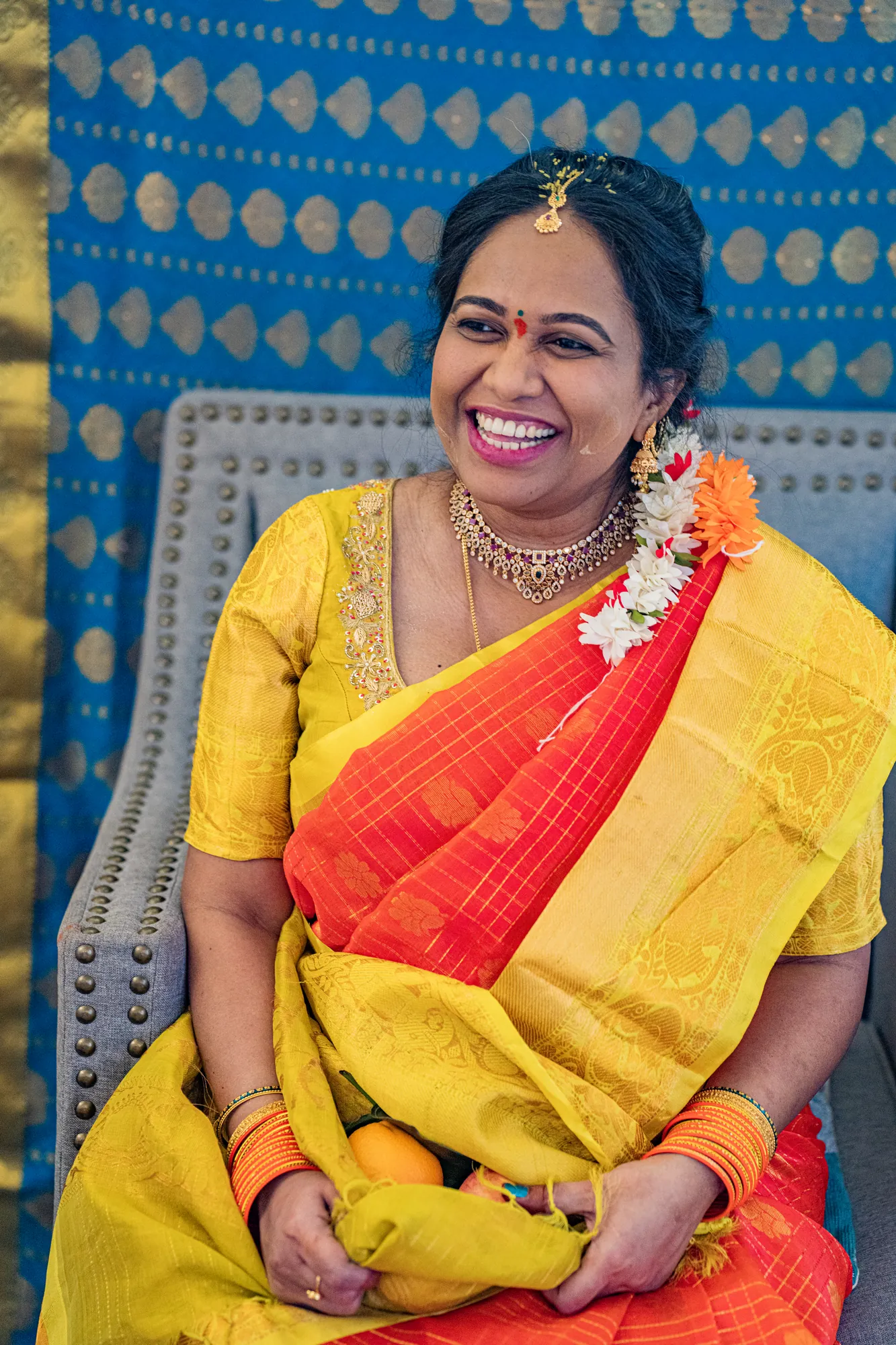
A baby shower at home is easy to host and surprisingly hard to photograph. In one afternoon the living room becomes a stage, a ritual space and a dining room, the best window is often behind the sofa, and once the food comes out, nobody wants to line up for a group photo. This guide covers the logistics we plan with families before the day: light, space, timeline, coverage and how a maternity session fits in.
It works for any shower at home and is written with Indian baby showers in mind, such as Seemantham (also called Sreemantham), Godh Bharai and Valaikappu. Customs vary by region and family: Seemantham is traditionally a priest-led samskara, and at many showers the expectant mother sits at the center while women of the family bless her with bangles, flowers, fruit and sweets. For the rituals themselves and a shot list, see our Indian baby shower photography guide, and for every ceremony we cover, our Indian family ceremonies page.
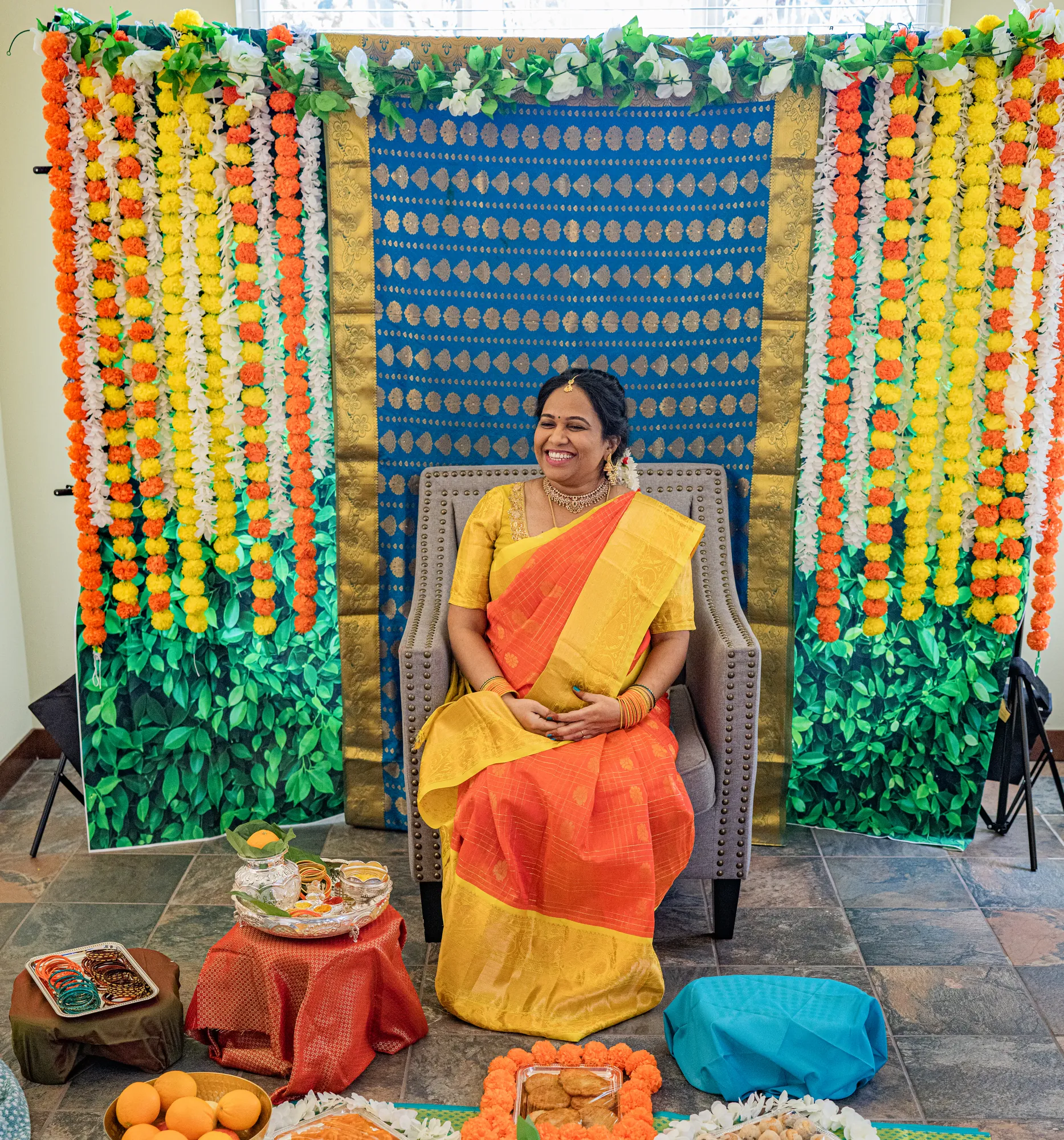
Where Should the Backdrop Go in Relation to Your Windows?
Place the backdrop so your largest window lights the front of the mother's chair, straight on or from one side, and never directly behind her. A bright window behind the chair turns her into a silhouette, while daylight from the front or side beats any lamp in the room.
- Side light is the sweet spot. With the window to one side, light wraps across her face and shows the sheen of a silk saree and the shape of the bump.
- Turn off overhead lights for the ceremony. Ceiling fixtures mixed with daylight paint faces in two colors.
- Soften direct sun with a sheer curtain or a white sheet over the glass.
- Check the room at the hour of the ceremony. For a late afternoon shower in fall or winter, look up sunset for your date with the US Naval Observatory sun and moon data. Once the windows go dark, the lamps become the light, so an earlier start is kinder to the photos.
- Put the backdrop where the light is, not where the wall is empty. A freestanding backdrop stand lets you put it anywhere in the room.
How Much Floor Space Does the Ritual Area Need?
Clear the whole area in front of the chair plus a walking lane on each side, because the ritual happens on the floor as much as in the chair. Trays sit at the mother's feet, elders step in from either side, and we need open floor opposite her to photograph the whole setup.
- Move the coffee table out of the room, not just against a wall, where it lands in every wide frame.
- Decide where the trays live: on the floor or a low stool in front of her, with a side table just out of frame for the next one.
- Seat guests along the sides, and keep a chair nearby for elders to rest between turns.
- Clear shoes, bags and cords. The floor is in the picture.
- Keep any oil lamp or candles on a stable surface, away from garlands.
What Does a Good Timeline for an At-Home Shower Look Like?
Run the day in this order: getting ready, the ceremony, family groups before food is served, then candids during the meal. The order matters more than the clock: when the ceremony ends, everyone is already at the backdrop.
Getting ready. The saree being pinned, her jewelry, and flowers going into her hair. Do it in the room with the best window, not a dim bathroom.
The ceremony. Elders take turns blessing the mother; in many families that includes turmeric and kumkum on her cheeks and forehead along with bangles and offerings. Ask one person to call each elder up so the line keeps moving and nobody is missed, which also lets us photograph every blessing from the same spot.
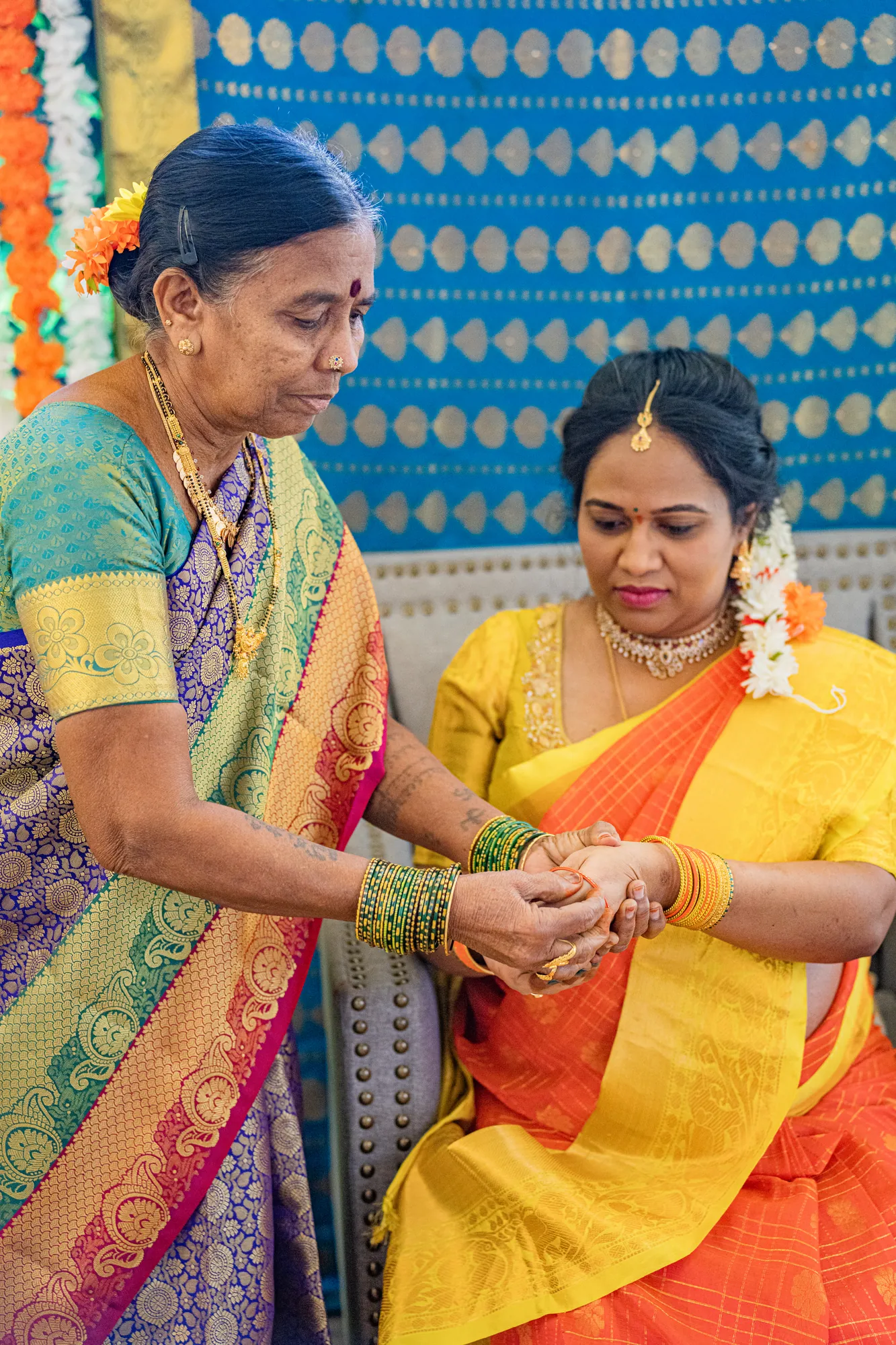
Family groups, before food. Everyone is dressed, the decor is intact and the mother is already in place. Ask the kitchen to hold the food until the groups are done; no other change helps shower photos as much.
Candids during the meal. We move through the house while people eat and catch up. If there is a cake or gift opening, tell us when.
One small trick: put an arrival time on the invitation that is earlier than the ceremony, so everyone you want in the group photos is there when the ritual ends.
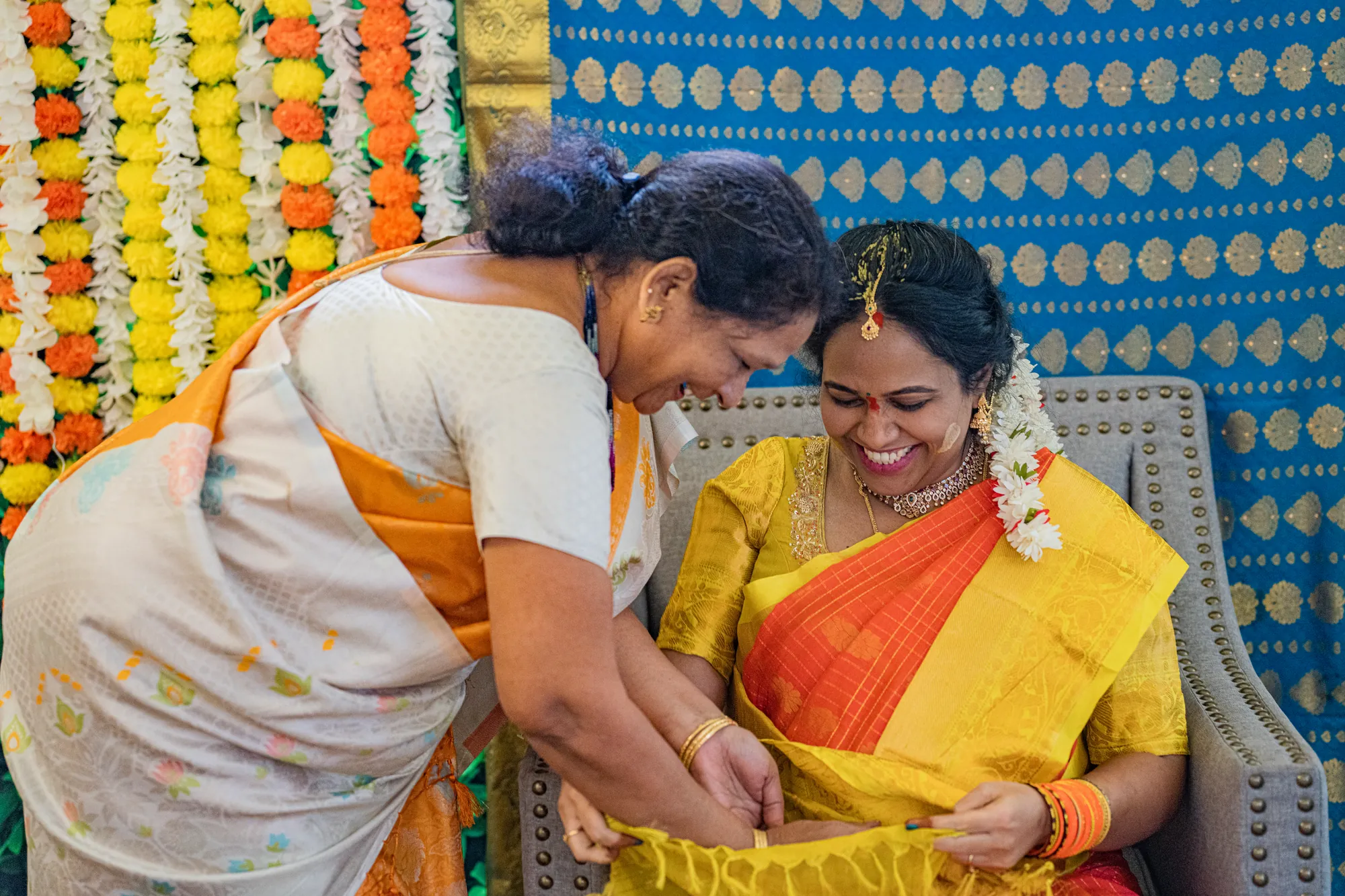
How Many Hours of Coverage Does a Baby Shower Need?
Coverage depends on which parts of the day you want photographed and how many people take part in the ritual, more than on guest count. Every elder who blesses the mother adds time. As general guidance:
- A small, close-family shower focused on the ceremony and groups needs the shortest coverage: we arrive as the ritual begins and stay until food is served.
- A mid-size shower told as a story starts with getting ready and runs into the meal.
- A large shower with a long line of blessings needs the whole ritual, the groups and the meal covered. Ask about having both of us there, so one stays on the ritual while the other covers guests and details.
Which Decor and Food Details Should Be Photographed?
Photograph the backdrop, the ritual trays, her jewelry and the food spread, ideally before guests arrive or just before the ceremony, while trays are full and garlands are fresh.
- The full backdrop with the empty chair.
- The ritual trays: bangles, flowers, kumkum, fruit and sweets.
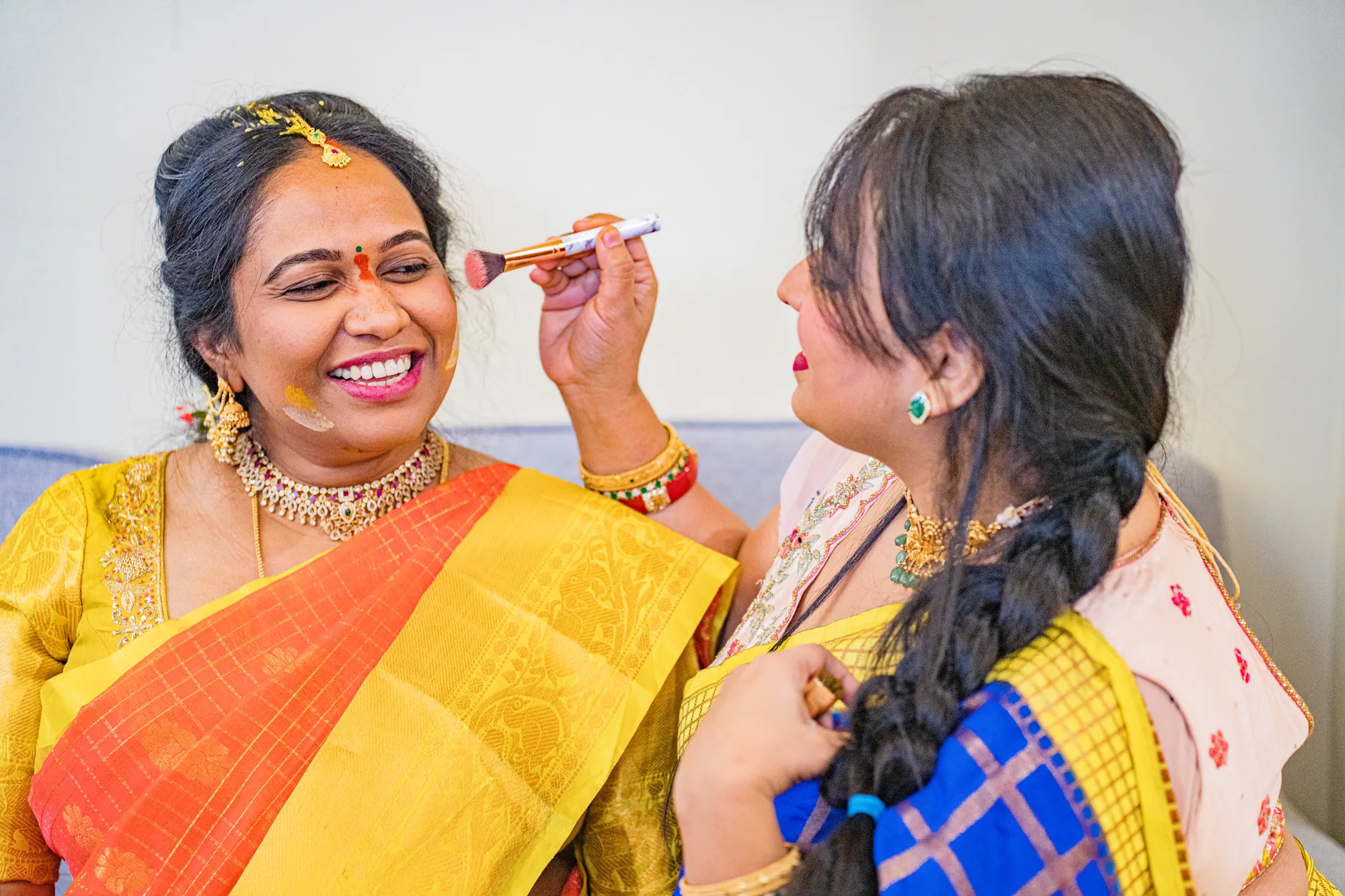
- Her jewelry, bangles, hair flowers and mehndi.
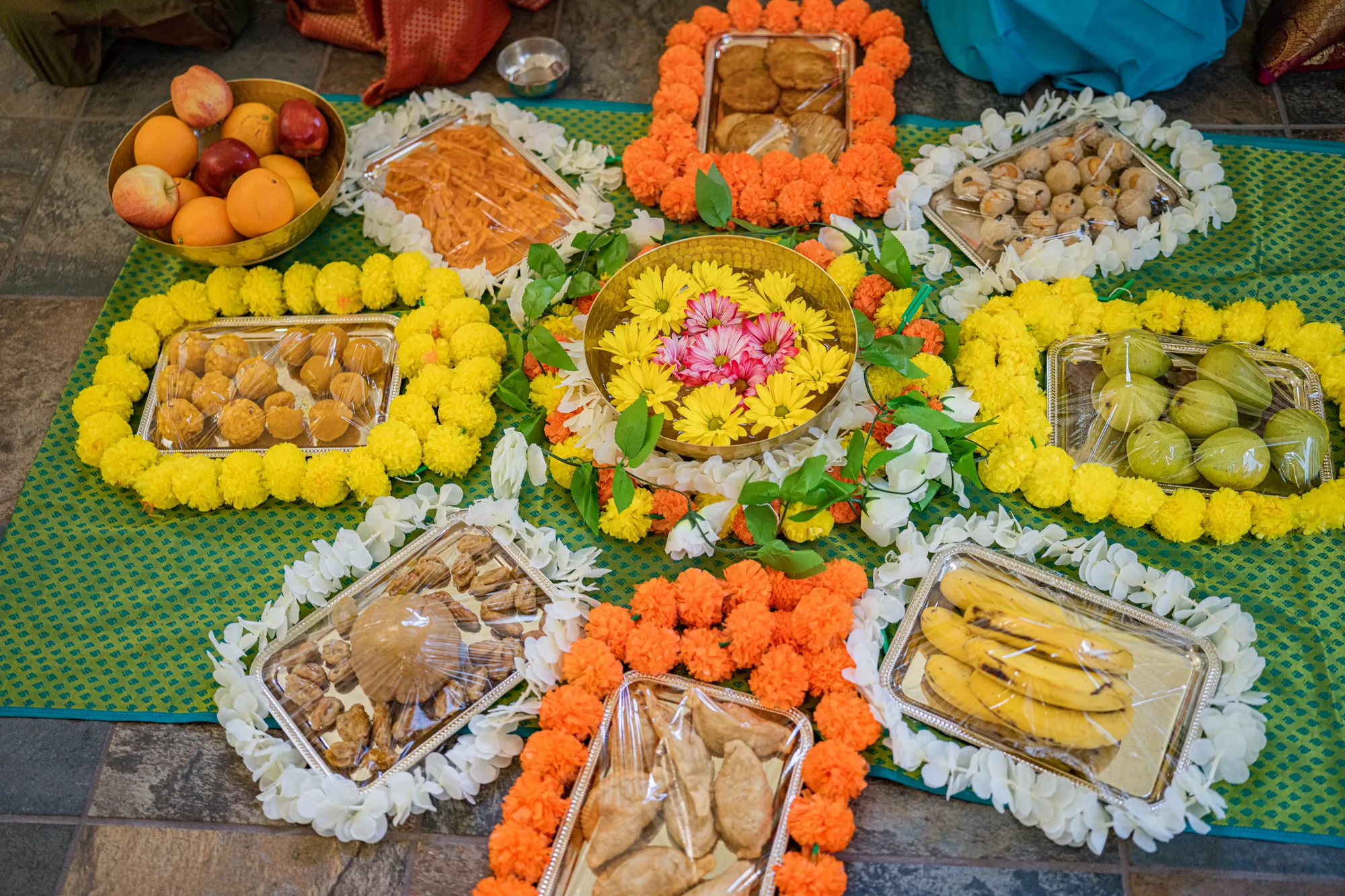
- The food spread from above, before anyone serves themselves.
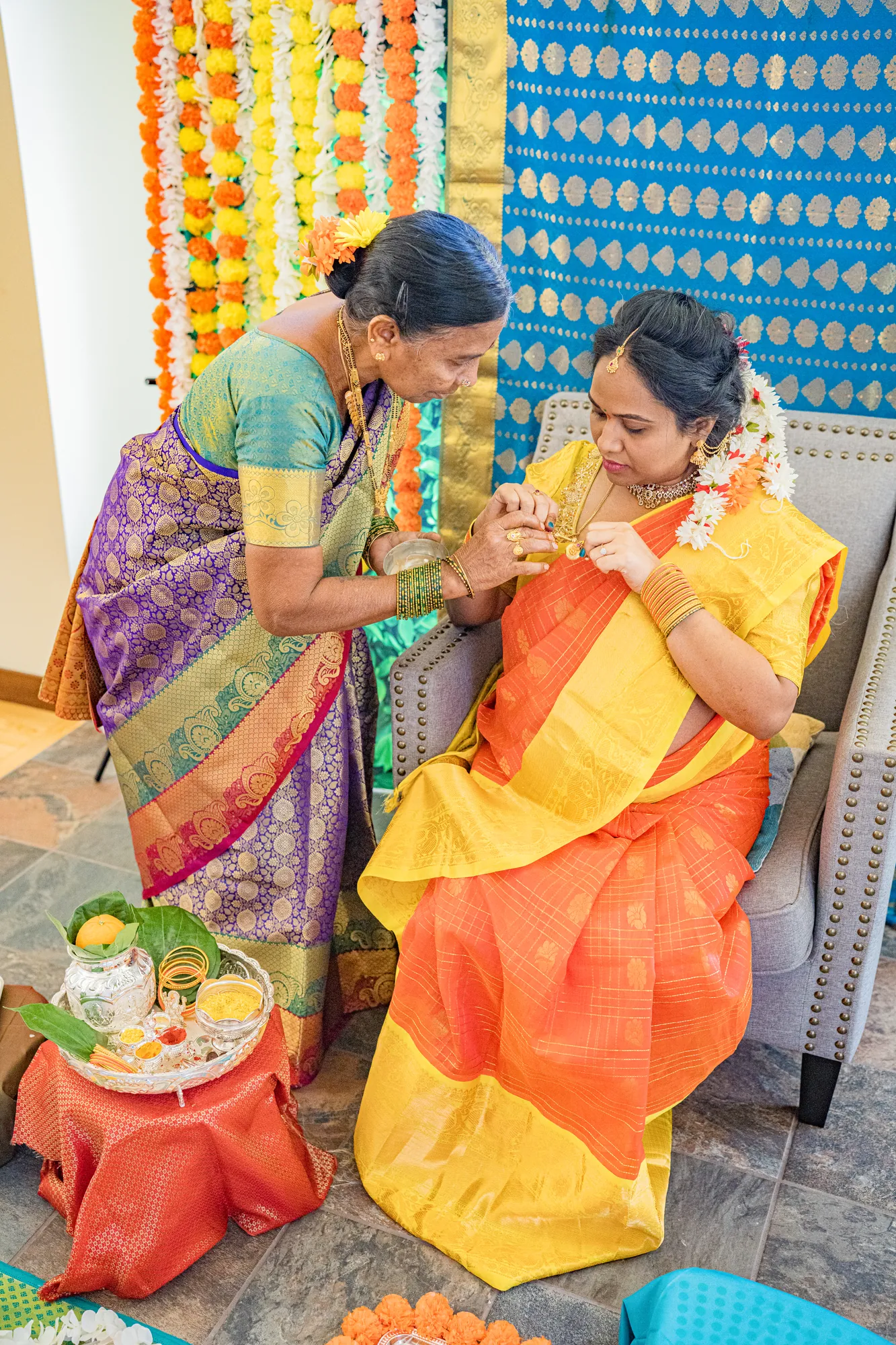
For the ritual trays and the food overhead, set them out a few minutes early and tell us; we work quickly so nothing sits out longer than it should.
Which Family Groups Go on the List, and Who Should Hold It?
Start with the mother-to-be and her closest family, end with everyone, and hand the written list to one helper who knows both families, never to the mother-to-be. A simple order works:
- The mother-to-be alone, then with her partner.
- With her parents, then her partner's parents.
- With grandparents, especially any who traveled to be there.
- With her siblings and their families.
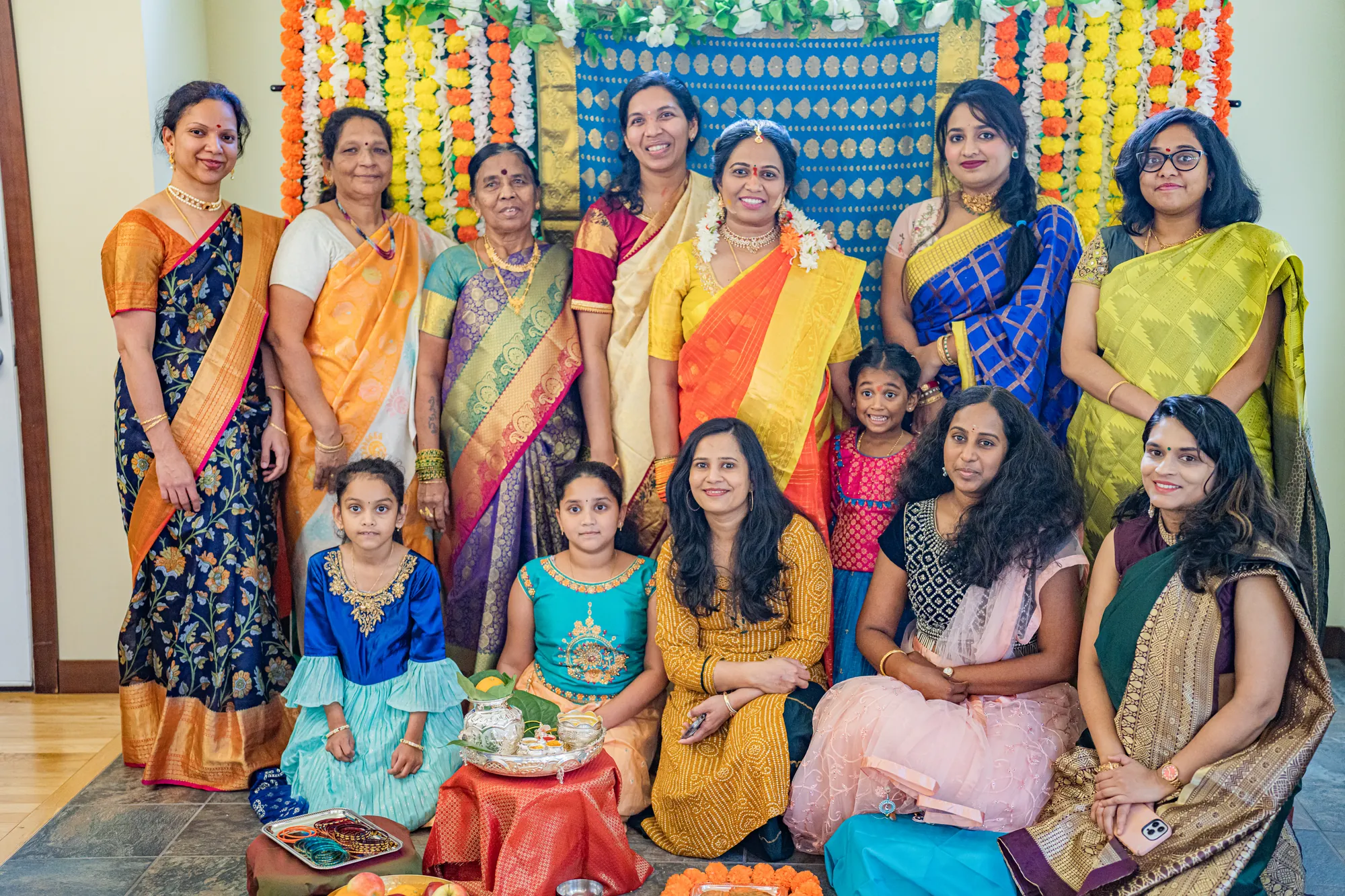
- All the women who took part in the blessing.
- Everyone together, last.
The helper calls the next group while we photograph the current one, so the food is not kept waiting.
What Can Guests Do to Help the Photos?
Guests help most by keeping the space in front of the mother clear, putting phones down during the main blessings, and coming quickly when groups are called.
- Keep the front of the ritual area open. Anyone standing between the chair and the camera blocks the photo everyone wants.
- Phones down for the first blessings, so the photos show faces instead of screens.
- Give kids a job, like carrying a tray to the mother. It keeps them busy and makes lovely frames.
Should You Pair the Shower With a Separate Maternity Session?
Yes, if you want calm portraits of the bump as well as the celebration. A shower is about family and ritual; a separate maternity session gives the parents-to-be unhurried time.
The timing usually lines up. The best window for maternity portraits is 28 to 34 weeks: 33 to 34 weeks for a first pregnancy, 31 to 33 weeks for a second or later baby, and 28 to 30 weeks for twins. Our guide to the best time for maternity photos explains why, and our maternity photography page covers sessions. If a full session is more than you need, we can take a short set of maternity portraits right after the ceremony, while she is dressed and at the backdrop.
When to Book, When Photos Arrive and How Pricing Works
For a weekend shower, 4 to 8 weeks of notice is ideal, and your edited gallery arrives in 3 weeks. Indian baby showers such as a Seemantham or Godh Bharai are covered as Indian family ceremonies, which start at $450; each shower is quoted on the date, hours, location and size of the gathering. Every shower we cover includes professional editing and a private online gallery.
For a quote, send us the date and start time, your city, roughly how many guests and how many will bless the mother, which parts of the day you want covered, and whether you would like maternity portraits too.
Where We Fit
We're Sunny and Tina, a husband-and-wife photo and video team based in Lake Stevens, photographing family celebrations at homes across Snohomish County and the Eastside. We work quietly around rituals and elders and always ask before photographing anything sacred. For everyday portraits, see our family photography page.
Planning a shower? Reach us through our contact page, check your date, or text (708) 677-7136. We reply within the hour, 7 days a week.