Choosing a wedding photographer is one of the most consequential decisions you'll make during your engagement. Long after the flowers wilt and the cake is gone, your photos are what's left. In Snohomish County, you have dozens of talented options ranging from solo shooters who book one wedding a month to studio teams handling multiple events on the same Saturday, and price isn't always a reliable signal of quality. The right photographer for your best friend may not be the right photographer for you, and the highest-priced option in your inbox isn't necessarily the most experienced.
We've spent years photographing weddings across Lake Stevens, Bothell, Lynnwood, Marysville, and Snohomish, and we've also been on the other side of the table, helping friends and family vet photographers for their own weddings. This guide is the framework we use ourselves: ten clear steps to evaluate any photographer objectively, regardless of whether you ultimately choose us or someone else. If your venue is in or around the city of Snohomish itself, our Snohomish wedding photographer page covers the venues and portrait spots around town. The goal is not to sell you on any particular studio, but to give you the questions and the lens you need to book with confidence.
Step 1: Identify Your Visual Style
Before you reach out to anyone, spend an evening on Pinterest and save 30 to 50 wedding images that genuinely move you. Look at the saved board with fresh eyes the next morning. Are the photos bright, airy, and pastel, or moody, dark, and cinematic? Are couples laughing candidly or holding intentional poses? Is the editing warm and golden, or cool and earthy? This is your visual fingerprint, and it matters more than any individual photographer's reputation. A nationally awarded moody photographer will produce a wedding album you don't love if your fingerprint is light and airy.
Once you know your style, you can filter Snohomish County photographers quickly. Most have an aesthetic they've committed to, and a good one will tell you up front whether they're the right fit. Be wary of any portfolio that looks like five different photographers shot it, consistency in editing is a sign the photographer has a defined process and won't deliver wildly different-looking images depending on their mood that day.
Step 2: Look at Full Galleries, Not Just Highlights
Every photographer's website shows their best ten or fifteen images from each wedding. That tells you very little. What you actually want to see is a complete gallery, eight hundred or a thousand images from a single wedding, start to finish. Highlight reels can be assembled by a beginner with one good frame from each of fifty different weddings. A full gallery shows you whether a photographer can sustain quality across an entire eight or ten hour day, including the difficult moments: dim reception lighting, harsh midday ceremonies, indoor getting-ready rooms with mixed light sources.
Politely ask any photographer you're seriously considering to share two or three full galleries from recent weddings. A confident photographer will share these without hesitation. If they push back or only send curated selects, treat that as data. The same logic applies to venues similar to yours, if you're getting married in a barn, ask to see a full barn wedding gallery rather than a curated mix.
Step 3: Read Real Reviews
Google reviews, The Knot, WeddingWire, and Yelp are your friends, but read between the lines. A photographer with thirty five-star reviews that all say variations of "amazing photos" is fine, but reviews that mention specific things, communication during planning, calmness on the wedding day, accuracy of the timeline, how missing files were handled, are gold. Look especially for reviews that describe stress moments: a delayed ceremony, a difficult family member, weather that turned. How a photographer handles imperfection on the wedding day is often more telling than how they handle a perfect one.
Don't stop at written reviews. Ask the photographer for two references, couples from the past year you can email or text directly. Most reputable photographers will provide these. Ask the references one question that isn't on a checklist: "What's the one thing you wish you'd known before booking?" The answer will tell you more than any star rating. The Knot's official guide on choosing a wedding photographer has a useful interview template you can borrow from.
Step 4: Understand What's Actually Included
"Eight hours of coverage" means very different things to different photographers. Get a written breakdown of every package: how many hours of shooting, how many edited images you'll receive, the delivery timeline, whether a USB or print release is included, whether engagement sessions are bundled or add-on, and whether a printed album is part of the package or sold separately. Also ask about travel fees, many photographers waive them within Snohomish County but charge for venues outside it.
Compare apples to apples. A $3,200 package with one photographer for six hours and 400 edited images is not the same as a $3,800 package with two photographers for eight hours and 700 edited images, even though they look comparable on a website. Build a simple spreadsheet with the four or five photographers you're seriously considering and line up the inclusions. The "expensive" option is often the cheaper one when you normalize for hours and deliverables. You can see how we structure ours on our wedding pricing page, and our wedding photography cost guide explains the math behind regional pricing.
Step 5: Ask About Second Shooters
A second shooter is a separate photographer working alongside the lead, and on most full-day weddings they make a meaningful difference. While the lead photographer is capturing the bride walking down the aisle, the second is capturing the groom's face. While the lead is photographing the first dance from one side, the second is on the other side getting the parents watching. Without a second shooter, you simply lose half the angles on every key moment.
Ask whether a second shooter is included or available as an add-on, who that second shooter typically is (a regular collaborator or a rotating cast), and whether you'll see their portfolio before the wedding. A second shooter who has worked with the lead for years will produce coordinated coverage; a stranger they hired off a Facebook group two weeks before your wedding will produce inconsistent results. For weddings over 75 guests or longer than seven hours, we strongly recommend not skipping the second shooter. You can read more about how we approach this in our our wedding photography services overview.
Step 6: Check Communication Style
Pay close attention to how a photographer communicates during the inquiry process, because that's exactly how they'll communicate during the months leading up to your wedding. Did they reply within 24 to 48 hours? Did their email answer your questions or sidestep them? Did they offer a phone or video call, or only push you toward a contract? Did the call feel like a conversation or a sales pitch? You'll be in regular contact with this person for six to twelve months, and on the wedding day they'll be the calmest voice in your ear when something goes sideways.
A specific test we recommend: send a slightly tricky email, maybe asking about a non-standard timeline, a difficult family situation, or a backup plan for rain. Notice whether the response is thoughtful and specific, or generic and templated. Generic answers in the inquiry stage usually mean generic service throughout the process.
Step 7: Read the Contract Carefully
The contract is where promises become guarantees. Read it slowly, ideally with a partner, and look for these specific clauses: cancellation and rescheduling policy, what happens if the photographer is sick or injured (do they have a backup network?), liability and insurance limits, image delivery timeline with hard dates, copyright and print release language, and rules around model releases and social media usage of your photos. Any contract that lacks a clear backup-photographer clause is a real risk, life happens, and you need to know who's walking in the door if your booked photographer can't.
Don't sign anything that doesn't specify a delivery deadline for your gallery. "A few months after the wedding" is not a deadline. "Eight to twelve weeks from the wedding date" is. Ask politely for changes in writing if anything seems off, a professional will accommodate reasonable adjustments and walk you through their reasoning on anything they can't change.
Step 8: Trust Your Gut on Personality Fit
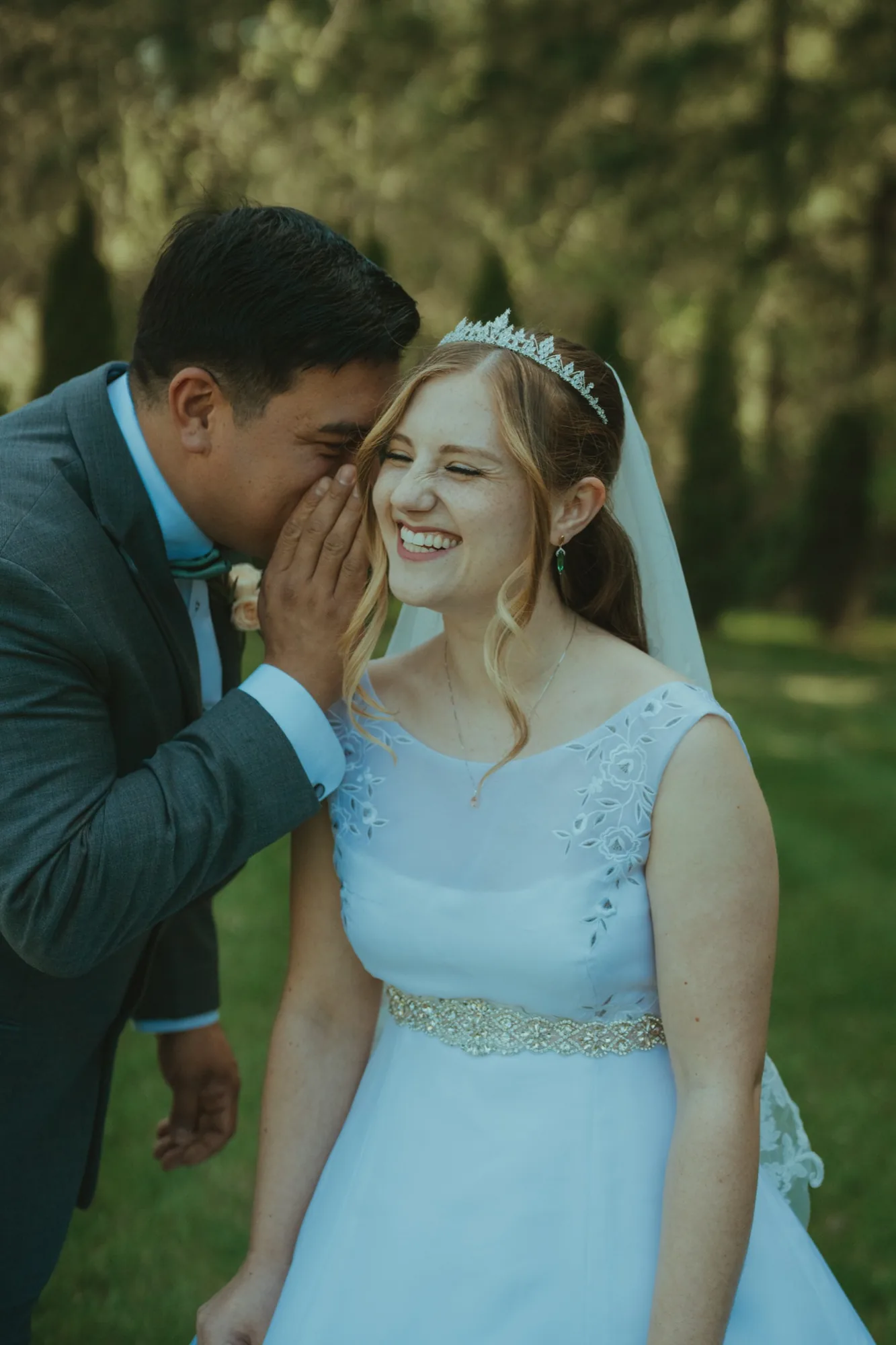
On your wedding day, your photographer will spend more time near you than almost anyone else, including your wedding party. You'll be undressed in a getting-ready room with them in the room. They'll coach you through portraits when you're nervous. They'll be three feet from you during your first kiss. If you don't feel comfortable around them on a thirty-minute video call, that discomfort will multiply ten times on the wedding day, and it will absolutely show in your photos.
After every consultation, ask yourself two questions: would I want to grab coffee with this person? And would I trust them to be the calm in a moment of chaos? If both answers are yes, you have a real candidate. If one is no, keep looking. There are too many talented photographers in Snohomish County to settle for a personality mismatch. WeddingWire's list of questions to ask a wedding photographer is a useful supplement when you're trying to read the room during a consultation.
Step 9: Why a Husband-Wife Team Can Be the Right Fit
Most photography studios are either solo shooters or rotating teams of contractors. A husband-wife team, like ours, sits in a different category, and it's worth understanding the practical advantages because they're not just marketing language. We're physically in the same room every day, so coordination on the wedding day is effortless: hand signals across the dance floor, shared shot lists in our heads, no warm-up time needed because we've shot together since before SunnyT existed. When one of us is photographing the bride's reactions, the other is already in position for the groom's. That kind of seamless two-photographer coverage is hard to replicate when your second shooter is someone the lead met three months ago.
A second underrated advantage: a husband and wife photographing your wedding bring naturally complementary energy into the room. One of us connects easily with the bridal party while the other coaches the groomsmen, and the dynamic shifts based on what the moment needs. Couples often tell us afterward that they felt like they had a married couple watching out for them, not just two technicians. That's not for everyone (some couples want a single visionary, and that's a totally valid preference) but if it resonates, it's worth weighing. You can meet our husband-wife team on our about page to see whether the dynamic feels right for you.
Step 10: Red Flags to Walk Away From
Some warning signs are subtle, but a few are unambiguous. Walk away if a photographer pressures you to sign a contract during the first call, refuses to share full galleries, won't put delivery timelines in writing, has no insurance, asks for the full balance up front, or doesn't have a backup-photographer clause in their contract. Other red flags: a portfolio that looks dramatically different from week to week (sign of heavy outsourcing), no business address or LLC registration, reviews that mention missing files or delivery delays, and photographers who badmouth competitors during the consultation.
Trust the data more than the discount. A photographer offering a deep last-minute discount on a Saturday wedding eight months out is usually doing so for a reason, and it's rarely a reason that benefits you. The right photographer at fair market price is dramatically less expensive in the long run than a cheap photographer whose gallery you don't love. Once you've worked through these ten steps with three or four candidates, you'll know which one to book, and the decision will feel obvious rather than agonizing.
Related: Snohomish wedding photographer · Snohomish County wedding photography · wedding photography cost in Snohomish County · Snohomish photographer